PhD Project: Leveraging Animal Intelligence To Repair Australian Mammal Communities
About the project:
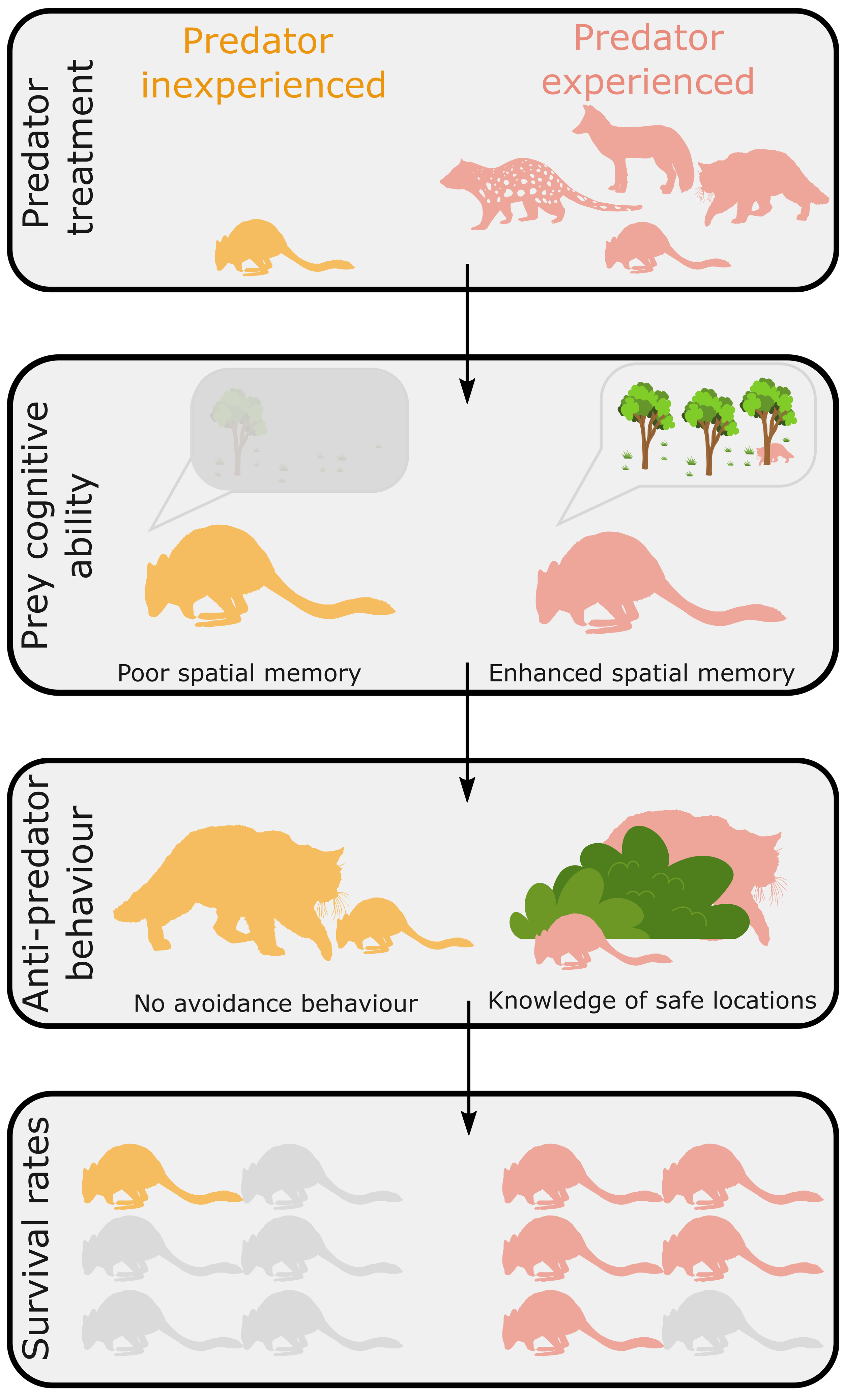
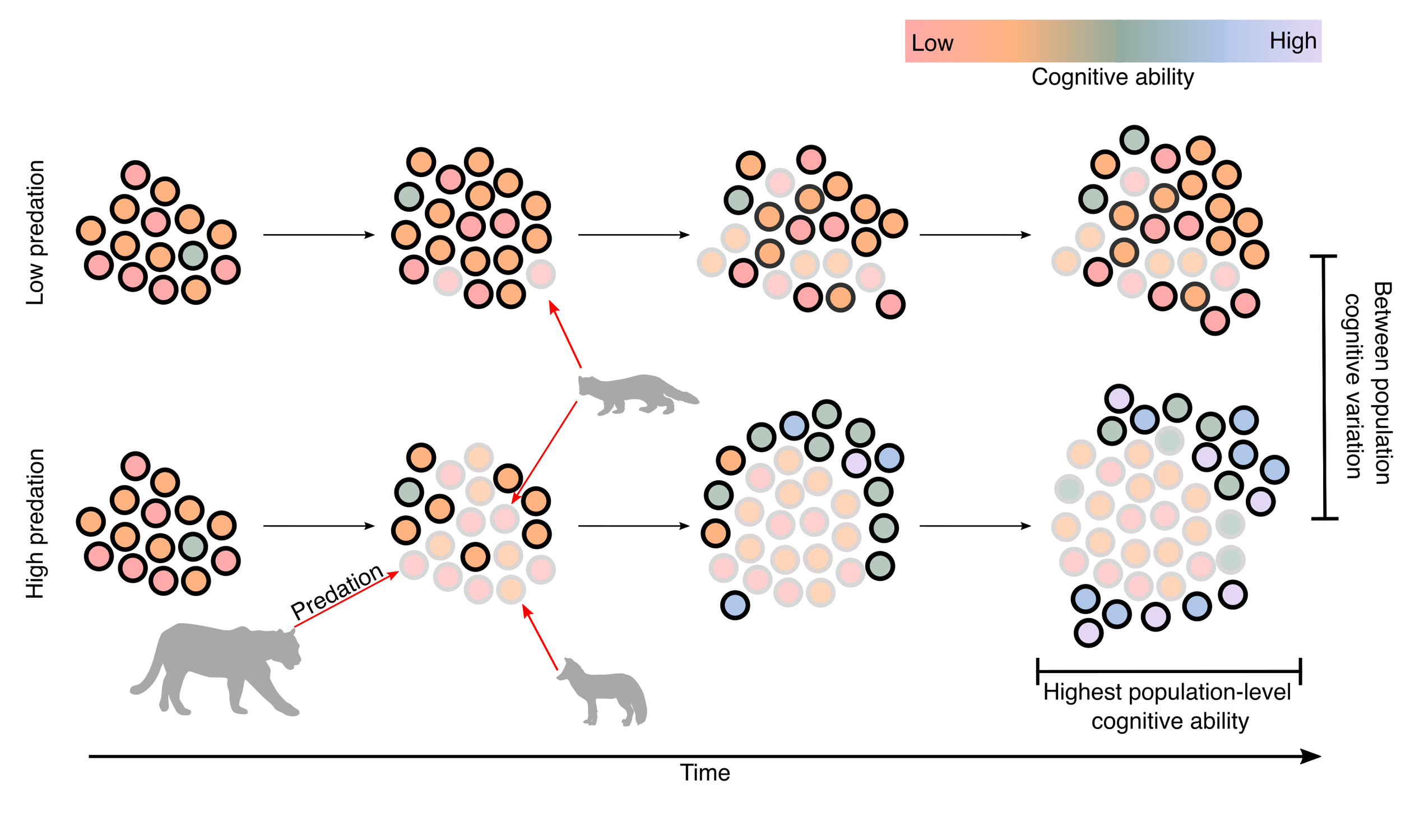
Predation is a driving force of evolution. Prey that fail to avoid predators are removed from populations, while survivors face unavoidable fitness costs that arise from physiological and behavioural responses to predation risk (1). To escape predation, prey learn from experience and memorise landmarks. These are key tenets of cognition (2), the processes by which individual animals acquire, process, store, and act on information from the environment (3). The role of predation in cognitive evolution has been largely overlooked (4,5), in favour of social and environmental explanations (6,7). We are looking for a PhD student who is interested in combining cognitive ecology with community ecology and conservation biology to understand how predation shapes animal learning and memory and then use this knowledge to improve reintroduction outcomes for Australia’s endangered small mammals. The core of this work involves conducting cognitive assays on and quantifying the anti-predator behaviour of Australian small mammals across ecological contexts. The successful applicant will work closely with Dr. Eamonn Wooster on his recently funded ARC DECRA project. More information on the ideas the project tests can be found in Wooster et al., 2024 Trends in Ecology & Evolution (5) and Wooster et al., Nature Reviews Biodiversity, In Press (8).
About you:
A BSc (honours) or a masters degree is essential. We welcome applicants from relevant backgrounds such as Behavioural Ecology, Community Ecology, Evolutionary Biology, Neuroscience and Conservation Biology. Experience working with small mammals, writing skills and familiarity with the R coding environment are desirable but not critical. Strong evidence of motivation and experience in conducting research is important. The applicant should be comfortable with extended periods of field work in both urban and remote locations.
About us:
The project is based at the CSU Bathurst campus but there is flexibility as to where the applicant lives within Australia, but close proximity to Sydney is preferred. Field work will take place in Sydney at Macquarie University and in remote Western Australia. Dr. Eamonn Wooster will be the lead supervisor. The project is supported by a vibrant global team including Prof. Martin Whiting (Macquarie University), Prof. Kaitlyn Gaynor (University of British Columbia), Prof. Dale Nimmo (CSU), Dr. Natasha Harrison (DBCA), Dr. Benjamin Ashton (Flinders University) and Prof. Joan Madden (University of Exeter) who the applicant will receive mentorship from. The successful applicant will have the opportunity to contribute beyond the PhD project on global collaborative projects about how cognition and human disturbance shape predator-prey interactions and cognition as an emerging conservation tool among other things.
Interested applicants are encouraged to get in contact with Dr. Eamonn Wooster (eif.wooster@gmail.com) with questions about the project. To apply, please send through a CV, academic transcript and recent writing sample (thesis or manuscript draft) with the subject heading “Cognition PhD”. Successful applicant(s) will apply for the mid-year intake for CSU PhD students in April 2026.
References:
1 Gaynor, K. M., Brown, J. S., Middleton, A. D., Power, M. E. & Brashares, J. S. Landscapes of Fear: Spatial Patterns of Risk Perception and Response. Trends Ecol. Evol. 34, 355-368 (2019). https://doi.org/https://doi.org/10.1016/j.tree.2019.01.004
2 Greggor, A. L., Clayton, N. S., Phalan, B. & Thornton, A. Comparative cognition for conservationists. Trends Ecol. Evol. 29, 489-495 (2014).
3 Shettleworth, S. J. Cognition, evolution, and behavior. (Oxford university press, 2009).
4 Byrne, R. W. & Bates, L. A. Sociality, evolution and cognition. Curr. Biol. 17, R714-R723 (2007).
5 Wooster, E. I. F. et al. Animal cognition and culture mediate predator–prey interactions. Trends Ecol. Evol. 39, 52-64 (2023). https://doi.org/https://doi.org/10.1016/j.tree.2023.09.012
6 Ashton, B. J., Kennedy, P. & Radford, A. N. Interactions with conspecific outsiders as drivers of cognitive evolution. Nat. Commun. 11, 4937 (2020).
7 Sol, D. Revisiting the cognitive buffer hypothesis for the evolution of large brains. Biol. Let. 5, 130-133 (2009).
8 Wooster, E. I. F. et al. Predator-prey interactions as drivers of cognitive evolution. EcoEvoxRvix (2025).